Thursday, January 21, 2010

Albow Gardens


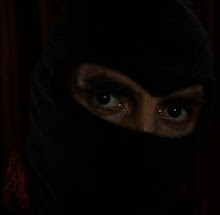
On assignment for COLORS magazine I met this suave gentleman who was unpeturbed by the photographic process. I think my presence finally mitigated all the titivating, polishing and tattooing which he had been doing for the last 65 odd years.

In my rounds of the council housing estate I also spent time with a prostitute(see 'nails'). When I asked her to open the curtains she said that it was impossible as they were nailed to the window frame to ban the light. We got along pretty well.

A very young woman lived in a room adjacent to the lounge. I have the feeling that she was kept there as a sex worker, willing or unwilling.

He husband was 7 feet tall and the meanest motherfucker imaginable. He refused to have his photo taken, but was obviously not averse to spectators because he stripped on their lounge table at weekends for cash.

Tuesday, January 19, 2010

N1 cover


The design of the N1 book is almost done. Here is the cover. The road only really appears on the front and back covers of the book. Inside it is hinted at, but never explained as fully as in the shots in this post.

The book is being designed with Erika Koutny.

Monday, January 11, 2010

Monday, December 7, 2009

DEMILITARIZED ZONE


I returned from Korea recently and made these two shots of the Demilitarized Zone(DMZ).

The first depicts a bunch of South Korean Soldiers approaching touristy binoculars which gaze across a misty valley towards a rather famished looking North Korean scene featuring an unbelievably tall flag pole.

The second depicts the binocular instrument.

Sadly the photography protocols at the DMZ prevented a shot of the valley and pole so we are resigned to a similarly lanky sentence.

Saturday, November 14, 2009

conceptual piece(cough) for my friend Kyle's birthday


Hb2uHb2uHbdkHb2u

The Milnerton Market


Don't snigger, I know it's been a while in coming but the time is almost here.

Milnerton Market
Die Plek van Verligting

When my work on this book was drawing to a close, I handed a dummy of it to the committee that runs Milnerton Market and invited them to flesh out the images with their own captions. The most pertinent of these illuminated a bleak and unpopulated shot of the market pitch, shrouded in mist. In heavy pencil, the caption read: Die plek van verligting. The place of relief.

Milnerton Market lies parallel to the ocean on a slim shoulder of barren land, and it could just as well be a second high-water mark. At weekends, when the place wells up again into full activity, it seems as if yet another massive wave of jumble has risen from the sea and its dark channels, rushed up over the beach, jumped the railway tracks, and emptied itself in the market grounds.

Only a close and prolonged look has made me realise that for some people the market is just this: a border zone between a place of relative comfort, on the one hand, and a place of uncertainty, on the other.

Milnerton Market occupies reclaimed land near the beaches where the first white settlers in Southern Africa set foot. For many of the stall holders and micro-entrepreneurs, the strip’s activities are themselves a work of reclamation, an attempt to reclaim economic viability and sense of self.

An orange diesel locomotive shunts derisively up and down the tracks like a blunted and misdirected messenger carrying outdated news from a past when many of the privileged white marketeers worked for parastatals like South African Railways, now called Spoornet. Such patterns of redundancy are the watermark of this book.

The order of the photographs adheres only marginally to normal time inasmuch as the first photograph I took at the market a decade ago appears at the start of the book and the last photograph at the end. They are also arranged in a vaguely chronological order to suggest some of the changes that occurred over the last decade – changes at Milnerton Market, changes in my own “documentary” sensibility – as well as to nurture the sense of contingency which makes a market circuit so rewarding.

Inside those brackets formed by the first and last photographs are one character, two old ladies, and some repeating triplets, to give rhythm and guide the reader over the market’s footprint. Essentially, the order of the photographs tries to maintain an air of outward haphazardness.

At the time of the design conception, I was bored by the trend in South African photo books in which layouts privilege photography as part of a higher order. Here, photography should be taken as everyman’s pursuit and the book design seen as analogous to the market itself rather than an ode to a medium. I also don’t believe that “social documentary” photography needs to patronise the viewer by bludgeoning a message home. This book’s various bits and pieces are meant to hint at a kernel of information whose nature can vary according to each reader’s sensibility.

My guiding principle has been to try to forge an object that would appeal to any marketgoer. Like a cursory lap of the Milnerton Market, browsing the book’s contents could seem simple.

But I hope that, through your repeated scrutiny, patterns will emerge from the mess, and that when you finally discover the slow-burning ship’s lantern protruding from a dusty tarpaulin (or the silver Eveready torch with pert red ON/OFF button for next to the door in the garage), the glow it emits will last a while.

I had fun over the years at Milnerton; the cracked conversations, fellow guttersnipes, and list-makers I encountered, not to mention the fascinating accumulations of useless junk piled everywhere, have all left me addicted.

The market is like a languid eddy which expects nothing from the focused collector or unsuspecting coaster who gets taken in its current. It has a frankness which is attractive, and I’ll continue going there as long as I can.

One weekend, after Friday night’s waves have spread a new quilt of junk over the trestle tables, you might end up finding these stained pages there too.
The contributors to this book have been extremely generous, for which I am most grateful. I would like to thank Ivan Vladislavic in particular for his patience and advice.

This book is dedicated to my parents, Mike and Sue.

http://www.britannica.com/bps/additionalcontent/18/28340214/ODKRIVANJE-NEOBI%C6%92%C3%A5AJNEGA-ZAMUJENA-IZKUNJA-IN-JU%CE%A9NOAFRIKA-DOKUMENTARNA-FOTOG

Read on...

Friday, October 16, 2009

Strange and beautiful buildings in, and near, Liverpool


Having always been attracted by systems which serve function primarily, with little regard for beauty in the traditional sense, this vent for a tunnel under the Mersey caught my eye with the big hook.

Wednesday, October 14, 2009

African Centre for Cities-UCT


The ACC at UCT employed me to illustrate Chapters in their new Journal called Counter Currents. This I did and these are some results.

I was invited to present my work at a conference run by the same Faculty and part of my general rationale was the urge to speak about a certain type of photography's ability to encapsulate the 'everyday and the epic'. This idea is not mine, but comes from a book which influenced me deeply called 'The Epic and the Everyday'. I found the book at a used bookstore recently and let out a small sound indicating delight...FnA!

Another speaker at the conference asked me if my argument was not a bit binary. Well of course it is, the implication being that the photos include what falls between the outer markers.

The 3 shots are from:

1. Mitchell's Plain-a poor area on the 'Cape Flats' where 'Colored' people stay
2. The border of 'Kosovo' in an area called Phillipi in the informal settlements
3. The 'Parade' in Cape Town's CBD

Monday, October 5, 2009

Cities in Crisis


A large volume has just been published which documents the colloquium that 'Cities in Crisis' was a part of.

Cities in Crisis is an exhibition which I co-curated with my fried, Professor Michael Godby, who is head of the Art History Department at the University of Cape Town. The show was exhibited at the FADA gallery in Johannesburg and is represented on the www at citiesincrisis.com

My two favourite shots are that of David Goldblatt and Guy Tillim which both collapse disparate spaces into coherent, readable space. Goldblatt's shot shows the remains of some kids' game called 'Onopoppi'. The remains are a floor-plan of a house which makes me think that 'poppi' means doll. Behind the floorplan of stones are some unfinished houses so this shot features a cartesian perspective in the foreground, and a more traditional elevations in the background. 10 points.

Guy Tillim's shot fucks with the brain by compositing the shadow of an invisible building behind a water reservoir. The resultant suggestion is a volumetric and spatial impossibility. 10 points.

Mine is the shot of a beachfront.

Go to the www to see the entire show please.

All day I dream about sex.


I did a big shoot for ADIDAS.

Books, bucher, boeke


Last week I stumbled upon a massive bookfair in London at the Whitechapel Gallery. I bought many books because I am obsessed with the format. Strangely, my favourite was this small yellow fellow which made me feel mellow.

Its called 'All the clothes of a Woman' and it's by Hans Peter Feldman. He is a latter- day list maker and collector. Apparently he owns a toy shop. The cover gives the contents away with inimitable accuracy.

Not two days ago in Johannesburg I found this orange chap which jumped out at me like a slap. It's a first English edition of Italo Calvino's Mr Palomar. It's really beautiful and often features the protagonist watching waves.

At times this reader feels that the act of watching the waves might be marginally more interesting that the description of Palomar watching the waves but, like the act of watching waves washing over eachother, Calvino always manages to bring the attention to attention.

I also Found a reprint of Juan Foncuberta's Fauna which is a fictional account of the travels and discoveries of a certain Dr. Ameisenhaufen. Presented like a botanist/explorer's diary the book charts the discovery of a wide variety of outlandish hybrid beasts. The good doctor even discovers an elephantine beast with a trunk which becomes luminious when the animal is distraughs-Elephas Fulgens. It's far out.

Here are some bad page shots. That's Ameisenhaufen noting 'a fact' in a small book, the lumo trunker and some other weirdos.